
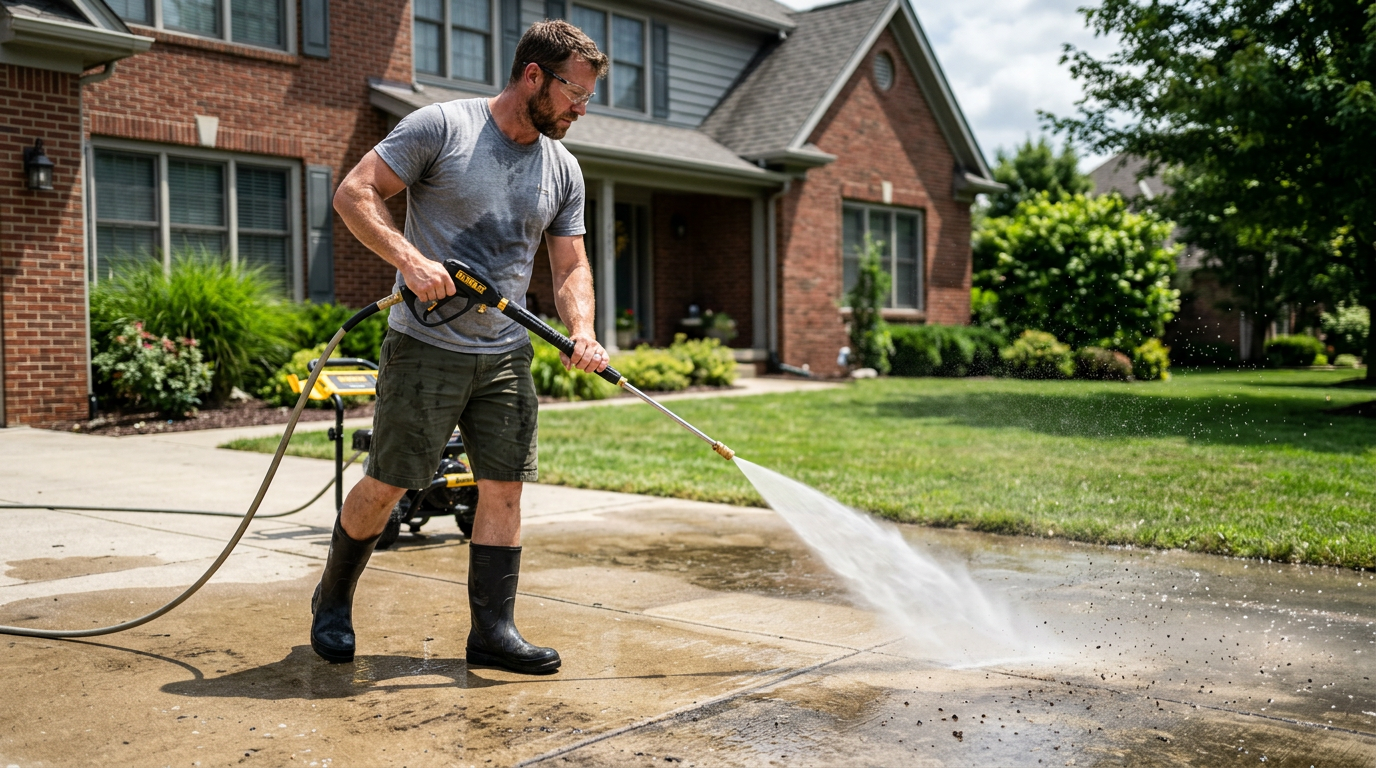
Concrete is porous. That's the fact most people don't think about when they pull into their driveway. When oil drips from a vehicle, it doesn't sit on the surface; it seeps into the concrete within a few hours. The same goes for rust from metal furniture, tannins from leaves, and the dark grime that builds up along tire paths over time. Once these things are in the concrete, they're harder to remove.
The general rule for most driveways in the Fraser Valley is once per year. That's enough to prevent buildup from becoming permanent and to keep the surface looking cared-for. If you have a vehicle that leaks oil, or if you park on the driveway year-round through wet winters, twice a year is better.
Oil is the one that creates the most urgency. Fresh oil, within a few weeks, can usually be lifted with the right degreaser and pressure washing. Oil that's been sitting for six months is significantly harder. Oil that's been sitting for a year or more has penetrated deeply enough that it may not come out fully. People are often surprised to find that stains they assumed were permanent can actually be removed with the right approach, but only if they haven't waited too long.
Concrete that's cleaned regularly lasts longer and looks better, and the difference in curb appeal is something people notice immediately.
Get a free quote→Moss and algae on driveways are more than cosmetic. A slick driveway is a liability issue, particularly in spring and fall when the surface stays wet for days at a time. We've seen driveways in Langley and Mission that were legitimately dangerous to walk on. That's not a situation you want, especially if you have kids or elderly family members coming and going.
The honest answer is that most driveways we see haven't been cleaned in three to five years. Sometimes longer. The work takes a few hours, the difference is immediate, and the concrete holds up better over time. If you can't remember the last time it was done, that's your answer.

